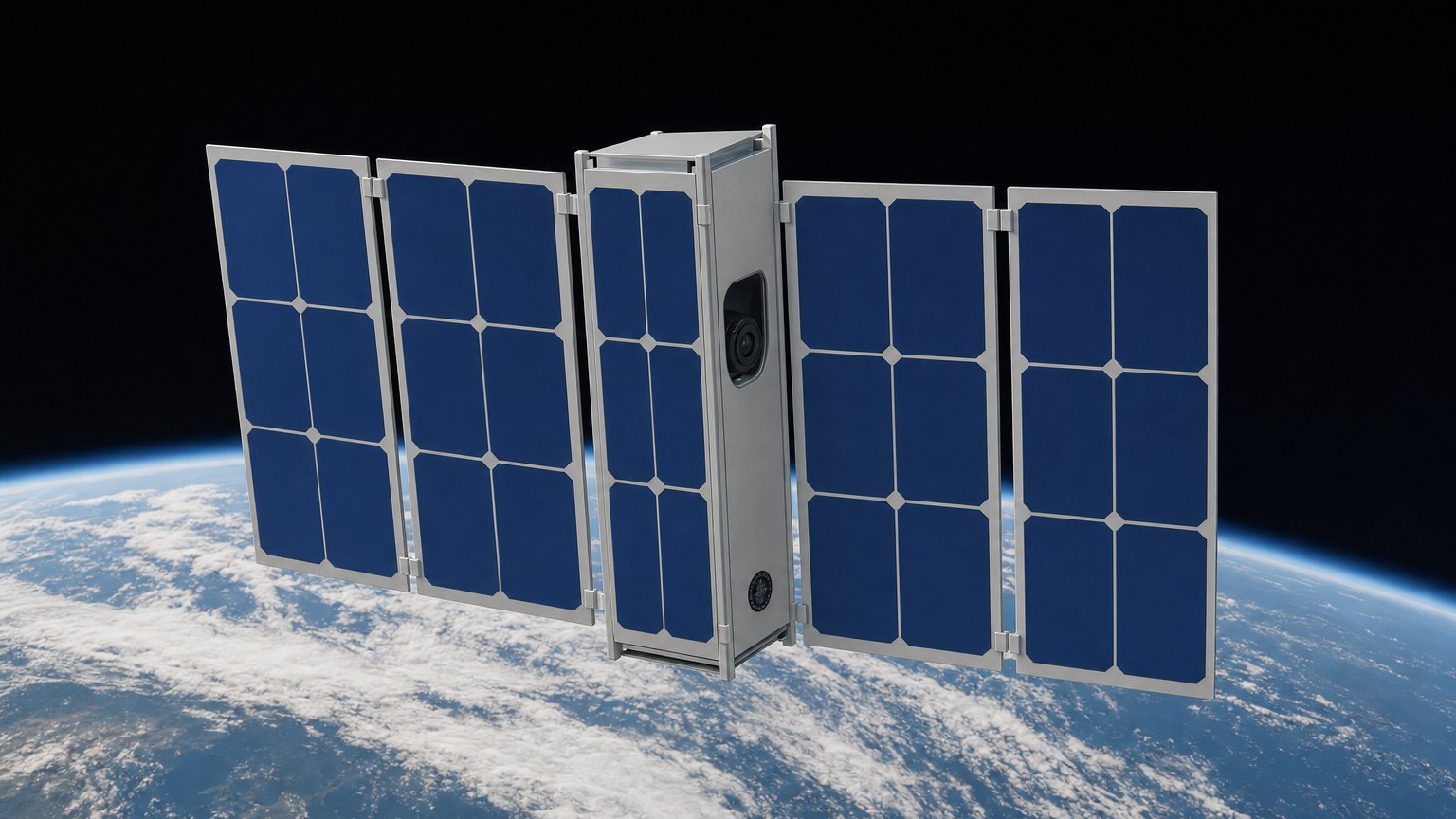
The six budgets
What a CubeSat costs depends on what it has to do. It helps to split the total into the parts that behave differently.
| Budget | What it pays for | What drives it |
|---|---|---|
| Bus | Structure, power, radio, computer, attitude control | Pointing accuracy, power, downlink rate |
| Payload | The camera, radio or instrument | Aperture, sensor, on-board processing |
| Launch | A rideshare slot and the dispenser | Mass, size in U, orbit, schedule |
| Testing | Vibration, thermal vacuum, EMC, functional tests | How much is already qualified at unit level |
| Licensing | Space authorisation, radio frequencies, export licences | Country, frequency bands, where the parts come from |
| Operations | Ground stations, mission control, data handling | Contacts per day, data volume, mission length |
What launch costs
Launch is the one budget with public prices. As of February 2026, SpaceX listed rideshare to sun-synchronous orbit at $350,000 for up to 50 kg, and $7,000 for each kilogram above that.
A 3U CubeSat is at most about 6 kg, so few CubeSat teams buy a slot directly. They go through a launch integrator that fills one slot with many satellites, supplies the dispenser, and prices by the U. Indian teams can also fly as rideshare on ISRO's PSLV, booked through NewSpace India Limited (NSIL), which quotes each mission.
Launch prices change from year to year. Get a current quote before you budget.
Why pointing is the expensive part of the bus
Structure, power and radios have become commodity parts. Precise pointing has not. An imaging mission needs reaction wheels, a star tracker and careful vibration control, and those are the parts that push a bus from a kit price to a mission price.
That is the cost our approach goes after. A payload that knows its own attitude and stacks short exposures on board lets the bus stop holding perfectly still for every picture.
Why satellite images blurThe costs teams forget
Testing. Every flight unit goes through vibration and thermal testing, and the campaign often finds work that has to be redone.
Licensing. An Indian satellite needs authorisation from IN-SPACe, and every satellite needs its radio frequencies coordinated through its national administration and the ITU. Frequency filing takes months, so start early.
Export paperwork. US-origin parts can need export licences, which add lead time. ITAR-free parts remove one of the slowest steps.
Operations. A satellite costs money every day it flies: ground-station passes, operators and data handling.
ITAR vs EAR, explainedHow to spend less
Pick the smallest size that carries the payload. Launch is priced by mass and by U, and a smaller satellite also needs less power and less test time.
Buy heritage where it is cheap, and engineer where it matters. Commodity subsystems with flight history cut testing risk. Engineering effort belongs in the payload.
Test early, on the ground and in the stratosphere. A high-altitude balloon flight costs a fraction of a launch and finds thermal and software problems before they become failures in orbit.
High-altitude balloon testingOur prices
We quote each mission, because the right bus depends on the payload, the orbit and the pointing it needs. Our 3U is in design and our 1U is in development. Star-camera engineering units can be reserved for 2027.