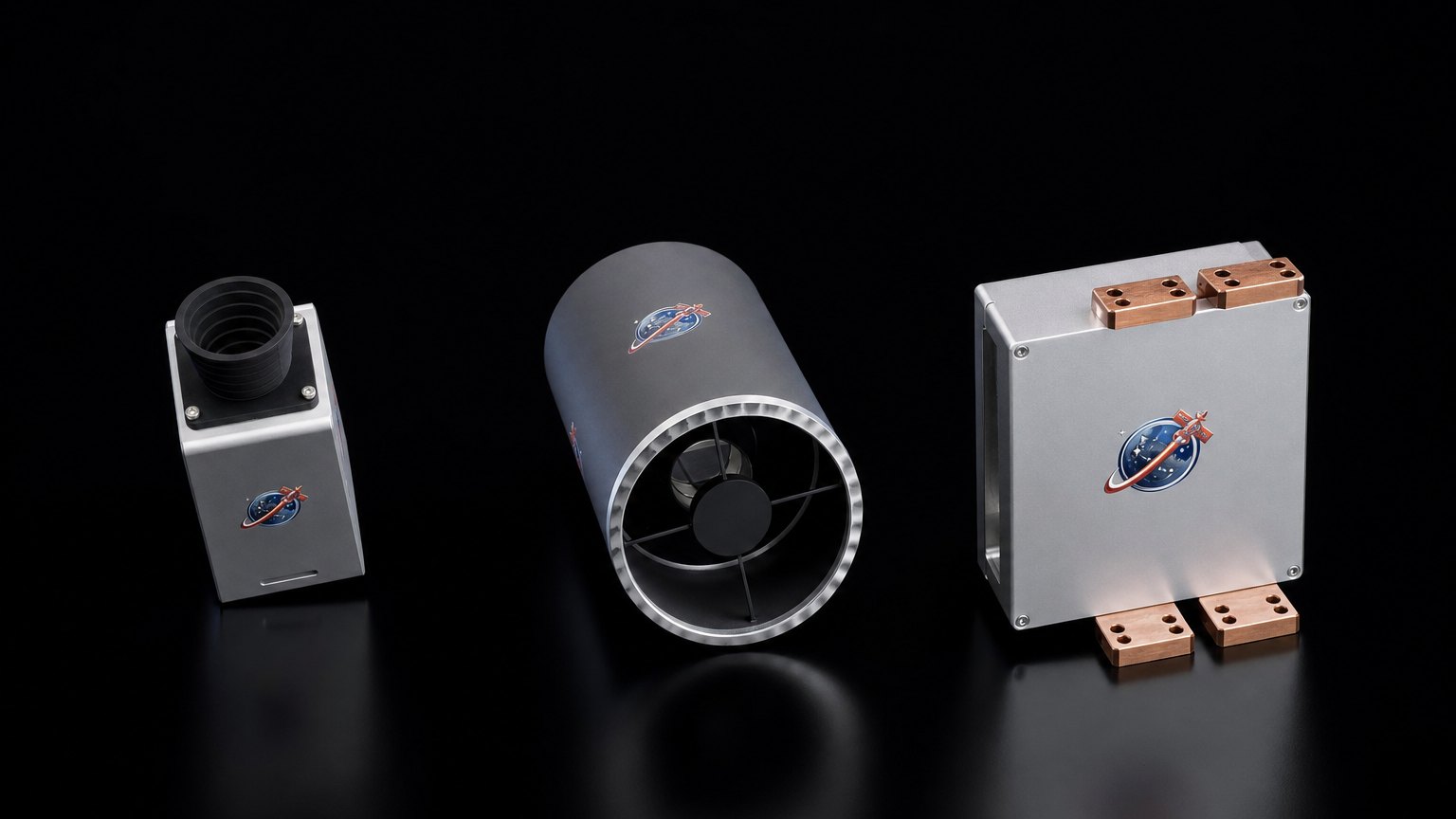
What the payload is
The payload is the equipment the satellite exists to fly: a camera, a radar, a radio, a science instrument. It is the reason the mission was funded, and it produces the data customers pay for.
What the bus is
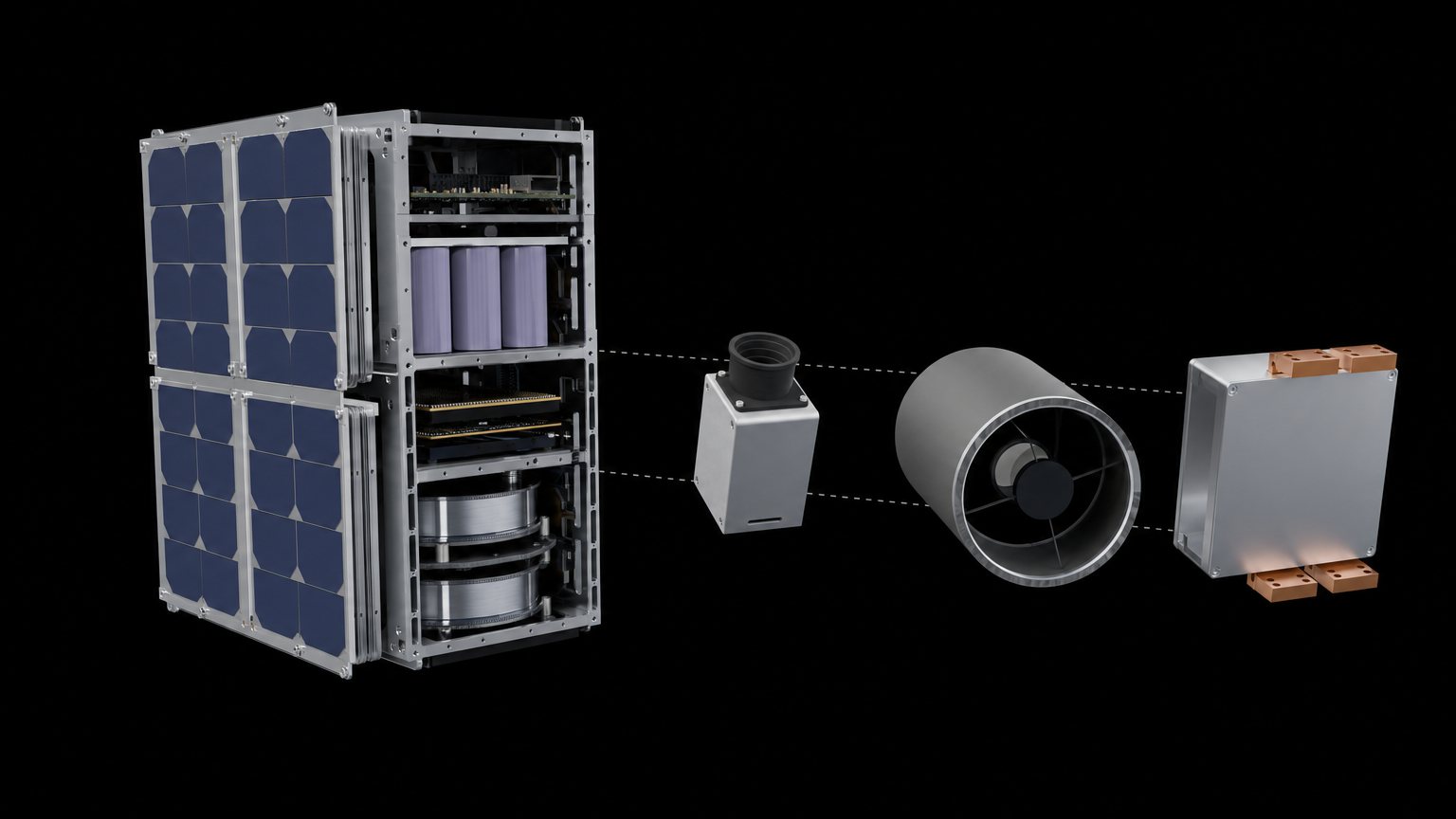
The bus is the platform that carries the payload. It provides structure, power from solar panels and batteries, thermal control, communications with the ground, an on-board computer, and the attitude determination and control system that points the spacecraft. Some buses add propulsion.
Many operators buy the bus from a platform supplier and concentrate their own engineering on the payload.
CubeSat sizes in one paragraph
CubeSats are built from 10 cm units, called U. A 1U CubeSat is roughly a 10 cm cube; a 3U is three units in a row; a 6U is roughly 10 × 20 × 30 cm. The size sets how much room the payload gets, how much power the solar panels can provide, and which launch dispensers the satellite fits.
CubeSat sizes and dimensionsWho decides image quality
The payload's optics and sensor set the best picture the satellite could take. The bus decides how much of that reaches the ground: whether the camera is steady during the exposure, and how well the satellite knows where it was pointing.
On a small satellite, that means image quality is usually bought from the bus: better reaction wheels, a star tracker, vibration isolation, and time spent settling before each picture.
Why satellite images blurMoving the precision into the payload
There is another way to divide the work. If the payload carries its own attitude knowledge and its own processing, it can measure its motion, register and stack short exposures, and geolocate the result without asking the bus to be perfectly still.
That is the idea behind our payload: a star camera, an edge compute module and imaging optics, fused by computational imaging, that returns a sharp, geolocated tile from a bus with ordinary pointing.